
Last updated November 23, 2026
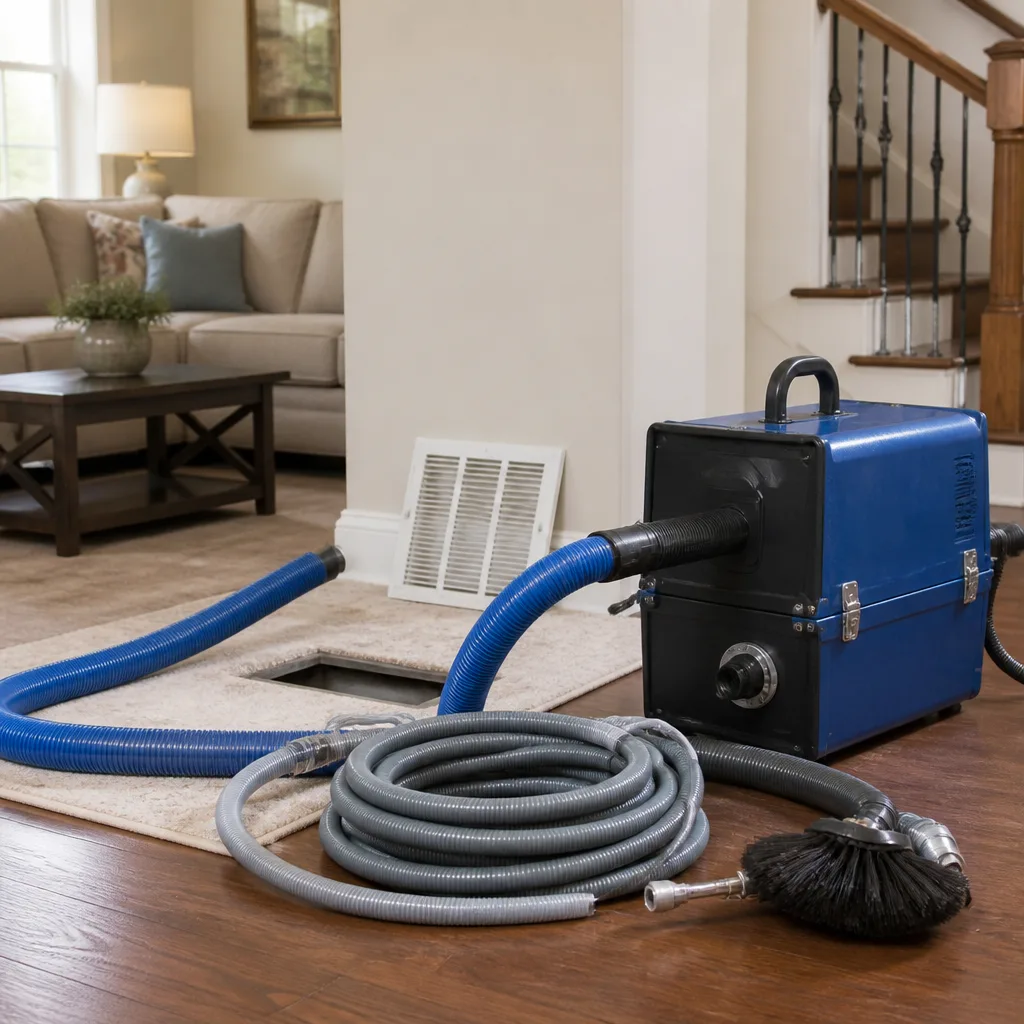 Whole-home duct cleaning
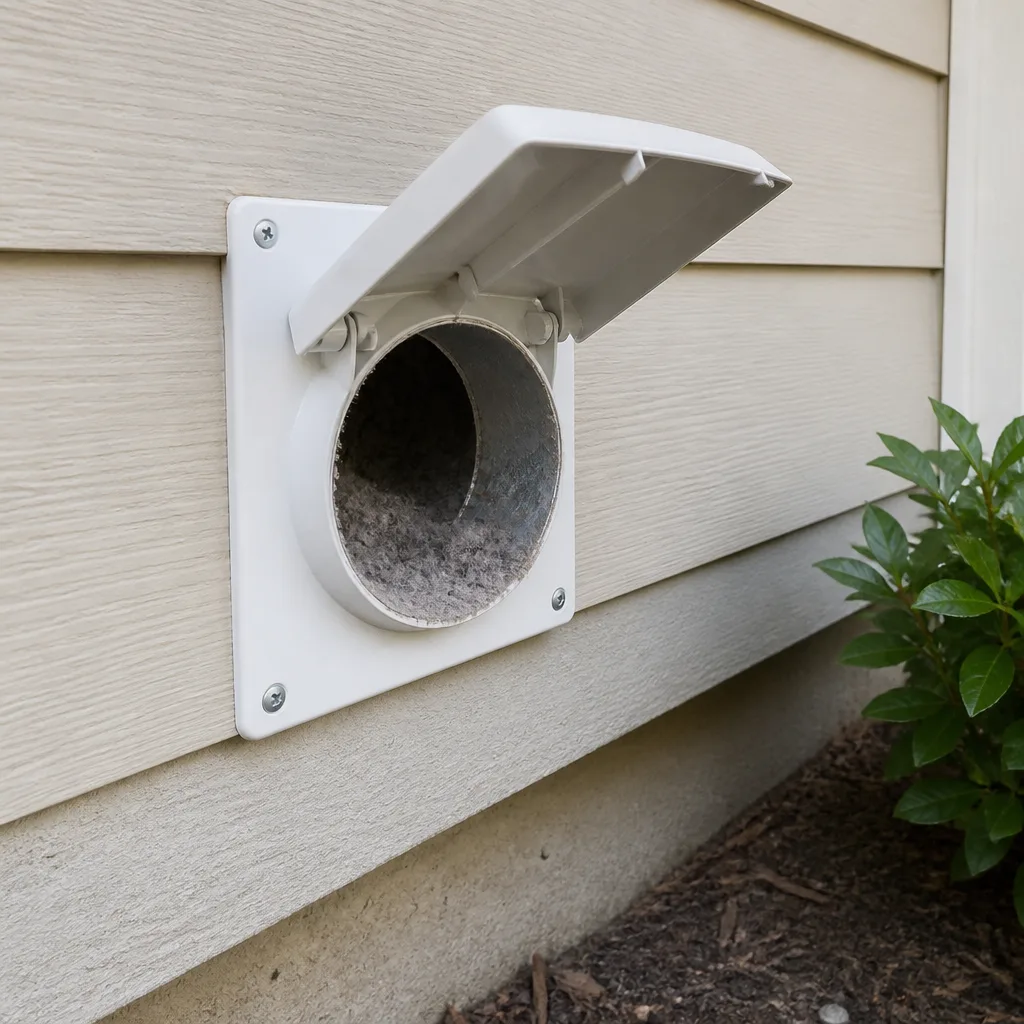 Dryer vent cleaning
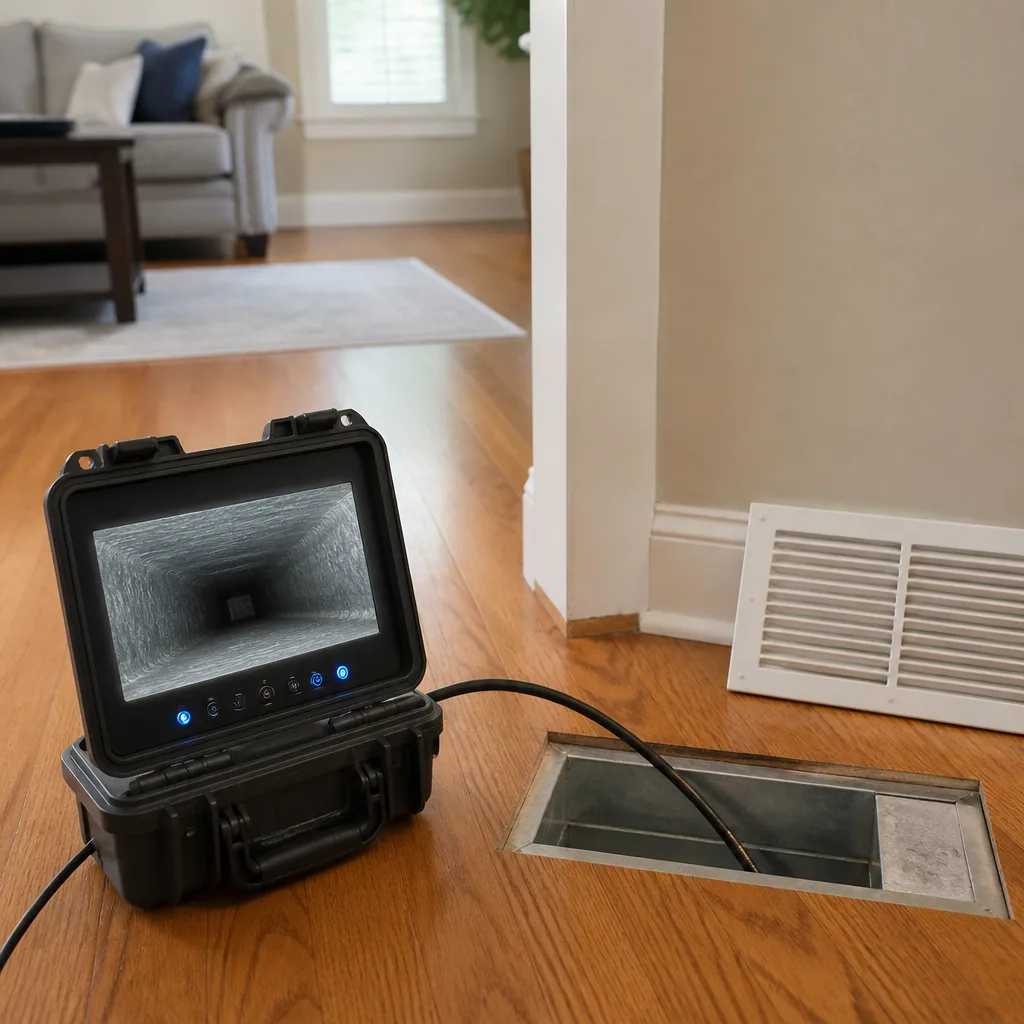 Camera inspection
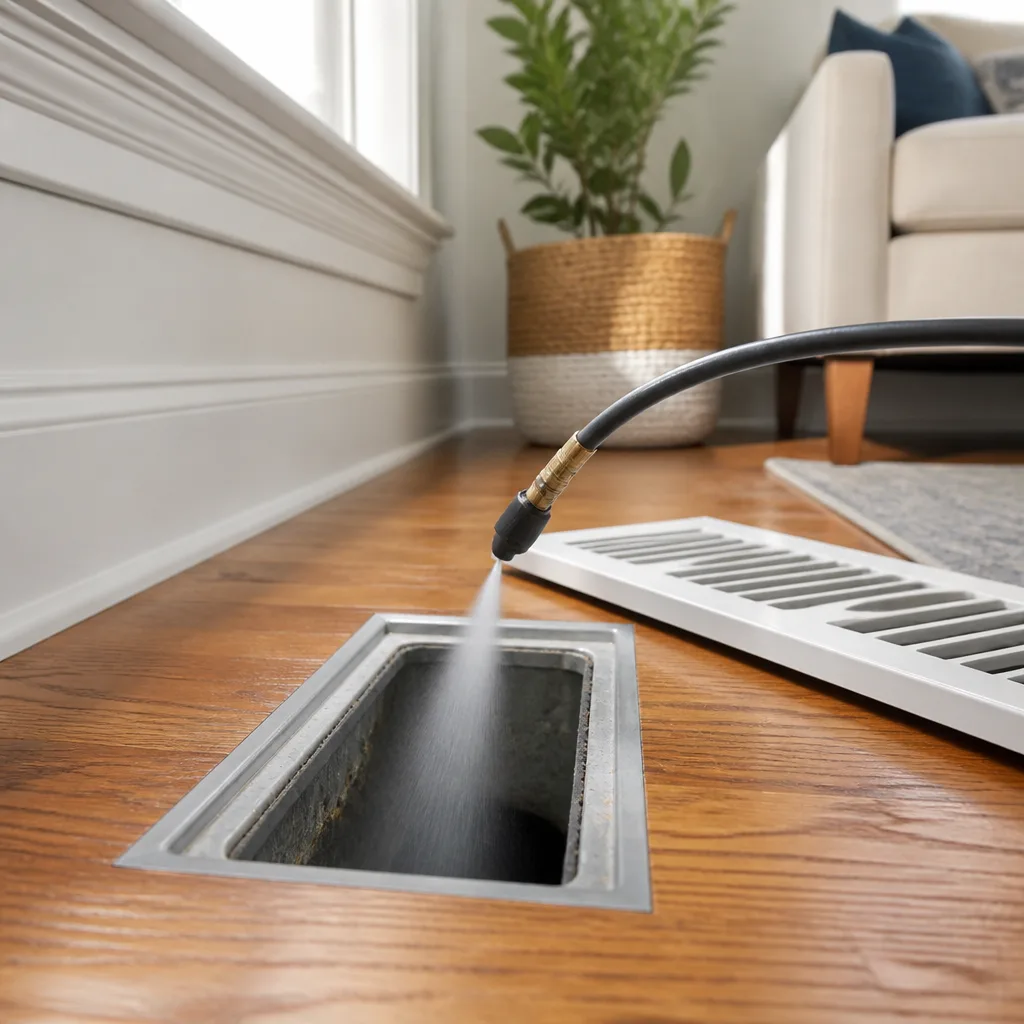 Sanitizing & deodorizing
Whole-system duct and dryer vent check with before-and-after photos - you see exactly what came out of your vents
That "$99 whole-house special" is a bait ad - the real number appears once they are in your hallway, or the "clean" is a shop-vac at the register. We photograph the inside of your ducts before and after instead.
Air Duct Cleaning Troubleshooting in Bluffview: Common Problems and How to Fix Them
A whistling supply vent and a musty return vent are two completely different problems, but most homeowners in Bluffview treat them the same way: turn the thermostat down and hope it clears up. That habit costs money. Duct trouble almost always announces itself first through a sound, a smell, or a pattern of weak airflow, and those signals point to very different causes under the same roof. Some need cleaning. Some need sealing. A few aren’t duct problems at all. In this guide, we walk you through how to read the symptoms the way a technician does, what those symptoms usually mean in Bluffview homes, and where the line sits between a fix you can manage and one that needs a trained professional.
Quick Answer
Most air duct problems in Bluffview fall into one of three buckets: airflow restriction from debris buildup, leakage at duct joints and seams, or an HVAC mechanical fault that looks like a duct problem but isn’t. A trained technician diagnoses which bucket you’re in before any cleaning starts. Cleaning fixes contamination; sealing fixes leakage; neither fixes a failing blower motor. Getting the diagnosis right is what saves you from paying twice.
Styles & brands we work with
- Whole-home duct cleaning
- Dryer vent cleaning
- Camera inspection
- Sanitizing & deodorizing
Table of Contents
- Symptom-to-Cause: How to Read Your Duct System
- Dirty Ducts or HVAC Problem? How to Tell
- Why Bluffview’s Clay-Heavy Soil Causes Duct Joint Separation
- Cleaning Fix vs. Sealing Fix: Why Confusing Them Wastes Money
- What the Smell in Your Vents Is Telling You
- What a Post-Cleaning Inspection Should Confirm
- What You Can Check Yourself and What You Can’t
- When to Call a Professional
Symptom-to-Cause: How to Read Your Duct System
Troubleshooting starts with your senses, not a tool. Every duct fault leaves a trail, and the trail usually shows up as one of five patterns. Once you match the pattern, the likely cause narrows fast.
Sound Patterns
- Whistling at a supply register: usually a restriction or a register that’s partly closed. High-pitch means high static pressure pushing past a narrow opening. In Bluffview homes with undersized flex runs, it can also mean a run got crushed during an earlier remodel.
- Rattling or flapping: a damper, a loose register, or a section of duct that’s separated from its hanger or collar.
- Rumble or boom when the system kicks on: often a blower or return-air sizing issue, not a cleaning issue.
Smell Patterns
- Musty, damp-earthy odor: organic material has collected somewhere in the system, and in a mild, humid Gulf-coast climate like Bluffview’s, that material is more likely to stay slightly moist.
- Chemical or paint smell right after a remodel: fine dust and solvent vapors pulled into the return before construction dust protection went up.
- A dryer-like lint smell near the laundry: a signal to check the dryer vent separately.
Airflow and Dust Patterns
- Weak airflow upstairs: a supply run that’s loose, crushed, or leaking at a joint.
- Dust settling within days of cleaning: leakage pulling in attic or garage air rather than a filtration failure alone.
- Uneven cooling between rooms: often a balance and leakage issue in the trunk line.
Match the symptom to the pattern, write it down, and you already have a much better starting point than “the vents smell weird.” If what you’re describing looks more like general buildup than a fault, our air duct cleaning page covers what a full-system service addresses.
Dirty Ducts or HVAC Problem? How to Tell
One of the most common calls we get is a homeowner sure their ducts are the problem when the ducts are actually fine. The air handler is failing, or the blower wheel is loaded up, or the filter is restrictive and overdue. Cleaning won’t fix any of those. Here’s how to separate the two before you dial anyone.
- Change the air filter and run the system for an hour. If airflow improves noticeably, the filter was restrictive and the ducts are probably not the primary problem. If airflow stays weak, note it and keep going.
- Check the register closest to the air handler and the one furthest away. If the near register is strong and the far one is weak, you’re looking at a supply distribution or leakage issue. If both are weak, suspect the blower or a blocked return.
- Look at your outdoor unit while the system runs. It should be pulling warm air off and not cycling on and off every couple of minutes. Short cycling is a mechanical sign.
- Listen at the air handler. A screech, a hum from the capacitor, or a rattle that changes with the fan speed is a mechanical sign, not a duct issue.
- Compare the dust on the register faceplates. A heavy dust ring around one register and none anywhere else usually means that run leaks at the collar, pulling unfiltered air.
If steps one and two point at the ducts and the mechanical checks come back clean, a duct-side service is worth scheduling. It’s also worth knowing that HVAC cleaning covers the air handler and coil side, where dirt interferes with the cooling cycle. When in doubt, ask the technician to diagnose before they clean. Any specialist who can’t tell you which problem they’re addressing shouldn’t be doing the work.
Why Bluffview’s Clay-Heavy Soil Causes Duct Joint Separation
North Texas sits on expansive clay soil, and Bluffview’s share of it moves. When the soil swells and shrinks with rain and dry spells, foundations shift by small amounts. Not dramatic amounts, but enough to matter over a house’s lifetime. Duct systems under a slab, or in a crawlspace reaching down toward one, get pulled with that movement. Every joint along the run takes up a small amount of stress, and after enough cycles, the tape or mastic at the seams fails.
What that looks like in practice:
- Hairline separations at trunk and branch joints that pull in unconditioned attic air or, on slab systems, soil gas.
- Collars that no longer sit tight against the boot at the supply register. Feel cold air drifting around the baseplate, and you’ve found it.
- Flexible runs that sag or kink where the ground has moved. A collapsed run delivers a fraction of its designed airflow, no matter how clean it is.
- Return leaks near the air handler closet that pull in dusty air from wall cavities.
This is why buying duct cleaning alone in Bluffview misses the mark in older homes where soil movement has done its work. Rotobrush and Nikro equipment can strip the interior back to bare metal and flex, but the leaks at the seams remain until they’re sealed. We offer Duct Repair & Sealing as its own service for exactly this reason. Cleaning restores the inside of the duct; sealing restores the envelope. If your home has ever had foundation work or you notice cold drafts at register boots on mild winter days, joint leakage is a strong candidate for what’s really behind your dust and energy numbers.
Cleaning Fix vs. Sealing Fix: Why Confusing Them Wastes Money
Cleaning and sealing solve different problems, and spending on the wrong one is the fastest way to feel like duct work is a scam. The distinction is simple: cleaning removes what’s inside the duct, sealing closes the gaps in the duct itself. Do them in the wrong order and each undoes the other’s value.
| What You Notice | Fix That Addresses It | What It Doesn’t Fix |
|---|---|---|
| Dust streaks at register faces, visible debris inside the return | Air duct cleaning | Air entering through leaks |
| Whistling supply, cold drafts at boots, uneven room temperatures | Duct repair and sealing | Contamination already in the duct |
| Musty smell that returns weeks after cleaning | Cleaning plus sanitizing plus leak correction | An uncovered moisture source |
| Blower wheel caked with dust, coil fouled | HVAC cleaning | Duct-side contamination downstream |
| Lint trail behind the dryer on every load | Dryer vent cleaning | Duct supply or return contamination |
In practice, most Bluffview homes we diagnose need the two together, cleaning first and sealing after. If you seal a dirty duct, you trap the debris. If you clean a leaky duct and walk away, you’re welcoming the next batch of dust straight back in.
The Proper Order
- Diagnose. Confirm which problem is present before touching anything.
- Clean. Remove debris from the duct interior, the registers, and the air handler access points.
- Sanitize where indicated. Targeted treatment for microbial or allergen concerns, using Guardsman-line products as part of the protection phase.
- Seal. Close joint separations, collar gaps, and any crushed or disconnected runs.
- Verify. Walk the system with a camera and a depression test to confirm both the clean and the seal.
Aprilaire and Honeywell filtration and humidity components belong in that conversation too. If your home has a media filter cabinet or a whole-house humidifier tied into the return, cleaning should treat the cabinet without disturbing the equipment. A technician who knows those product lines can do that without guessing.
What the Smell in Your Vents Is Telling You
Odor is the most overlooked diagnostic clue in duct work, and the easiest to overreact to. Not every smell means contamination. Here’s how to sort them.
- Musty and damp: moisture has somewhere to sit. In a mild, humid climate like Bluffview’s, this often traces to condensation on a cold coil that isn’t draining cleanly, or to attic duct runs that have picked up humidity over a long summer.
- Sour and acrid: usually a sign of a filter that’s been left too long or a coil that needs cleaning. Address the source, not the ducts.
- Chemical or new-construction smell: fine dust from drywall, sawdust, and paint vapors pulled into the return before dust barriers went up. Cleaning clears it, but if it’s come back after every renovation, ask about a return-side dust protection plan during the next project.
- Hot, dry, dusty smell from one room: often a supply run leaking into an unconditioned space. Sealing is the fix, not masking.
- Lint-and-heat smell near the laundry: dryer vent. That one gets its own page for a reason.
If you’ve pinpointed the dryer vent as the source, our dryer vent cleaning page covers how a full lint removal works and why it’s a separate job from the main duct system. If the smell is airborne rather than duct-borne, our Air Duct Cleaning Bluffview overview walks through the five services that cover the whole indoor air path.
What a Post-Cleaning Inspection Should Confirm
You can’t see inside a duct from the hallway, which is exactly why post-cleaning verification is where trust gets built or lost. A serious operator documents the work; a fast operator doesn’t. Here’s what to look for.
- Before-and-after photos from inside the duct. Not stock photos, not a single wide shot of your register. Actual images of the run interior at multiple points.
- Camera verification at the trunk, the branches, and the air handler connection. A wand image doesn’t prove the branch runs are clean; a camera does.
- Cleanliness confirmed at the register boots. Boots collect dust and are often skipped. They should be wiped and free of settled debris.
- The air handler cabinet reopened for a look. The blower compartment shouldn’t have dust falling back into it.
- A walkthrough with a written summary. Any leaks found during the job should be documented even if sealing is scheduled separately.
- A clear statement of what was and wasn’t treated. If sanitizing was part of the visit, you should know which products and where they applied.
Ask before the job starts what the post-inspection will include. A specialist who reaches for the camera without being asked is the one you want.
What You Can Check Yourself and What You Can’t
Some duct troubleshooting is genuinely within reach for a homeowner. Plenty of it isn’t, and knowing the line protects both your wallet and your safety.
Reasonable to Check Yourself
- Filter condition and fit. A filter sitting crooked is passing air around its own edge.
- Register and grille obstruction. Closed dampers, furniture pushed against returns, rugs over floor registers.
- Visible dust at register faces and clear signs of drafts at boots.
- The dryer vent at the exterior termination for lint buildup, provided the flap is reachable and closed.
- Whether your outdoor unit is cycling normally.
Not a Do-It-Yourself Task
- Electrical panel and wiring work. Breakers, air handler electrical connections, and any low-voltage wiring repair belong to a licensed electrician or HVAC professional. The air handler cabinet contains line-voltage connections that can cause serious injury, and we don’t recommend opening it for anything beyond a filter change. If your system trips a breaker or a blower won’t respond, call a professional.
- Gas-fired furnace or any gas line work. Likewise; a licensed technician handles anything involving the gas train or ignition sequence. Never open those panels to troubleshoot a “duct smell.”
- Attic duct sealing without fall protection. Attic runs are often on narrow trusses and beneath low headers. A fall from an attic joist is genuinely dangerous. If your leaks are in the attic, let a trained technician handle the crawling, footing, and sealing.
- Duct sealing beyond accessible register boots. Mastic application requires a clean surface, the right product, and enough access to do it properly.
None of this is about keeping secrets. It’s about recognizing where a small misstep turns a cheap fix into a serious injury. If you’re unsure which side of the line your issue sits on, describe it on the phone and let the technician tell you.
When to Call a Professional
Call a professional if any of these describe your situation. A musty smell that returns within a month of cleaning. Whistling or cold drafts at more than one register. A remodel dust episode you can’t clear with filter changes. Airflow that hasn’t improved after a filter swap and register check. Visible separation at a duct joint. A dryer vent that’s been flagged in an inspection. An HVAC system that short cycles. Any smell near gas appliances. Any electrical issue. These aren’t cases to solve with another pass of the shop vac. They need a technician with a camera, a leak diagnosis, and the equipment to fix the cause instead of chasing the symptom. Air Duct Cleaning Bluffview offers free estimates in Bluffview. Call (855) 337-1683. We answer 24/7, and fast dispatch runs from 7am to 7pm, Sunday through Friday.
See the difference
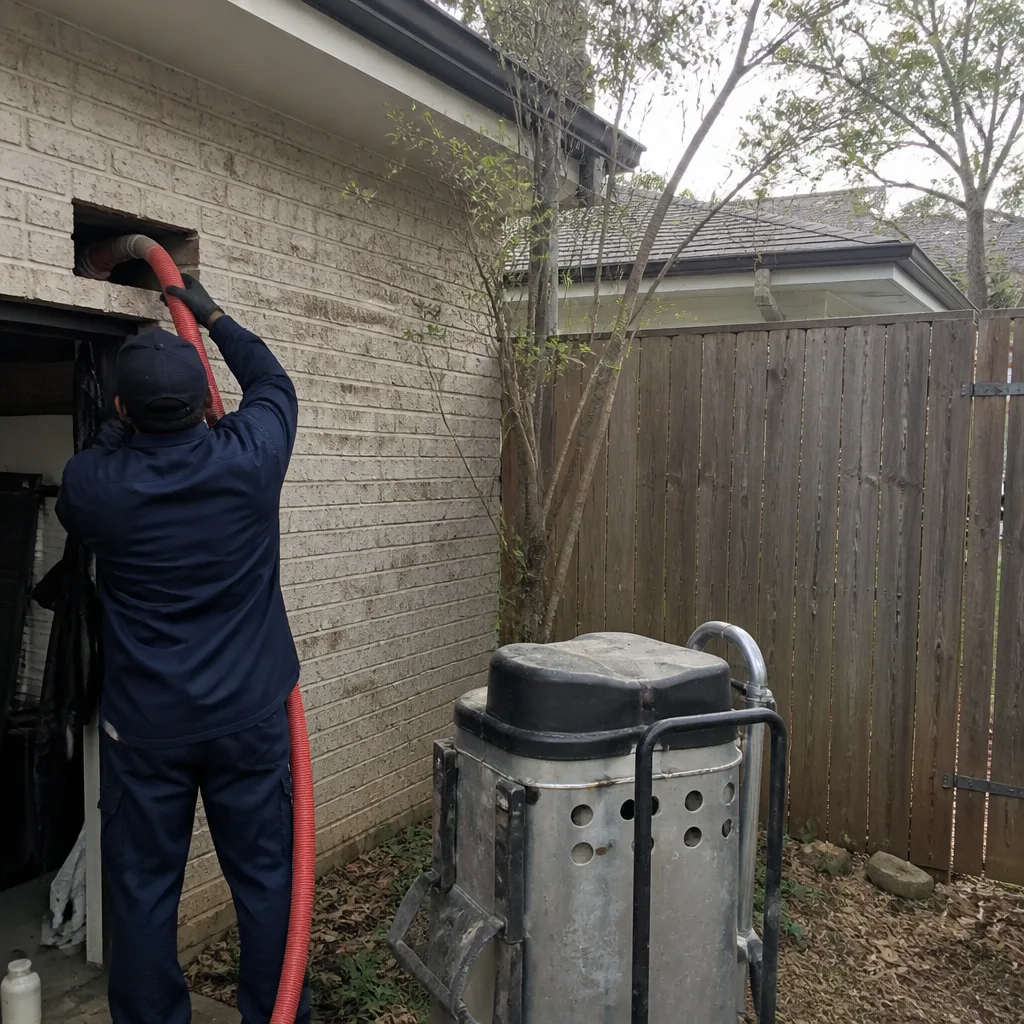 Before
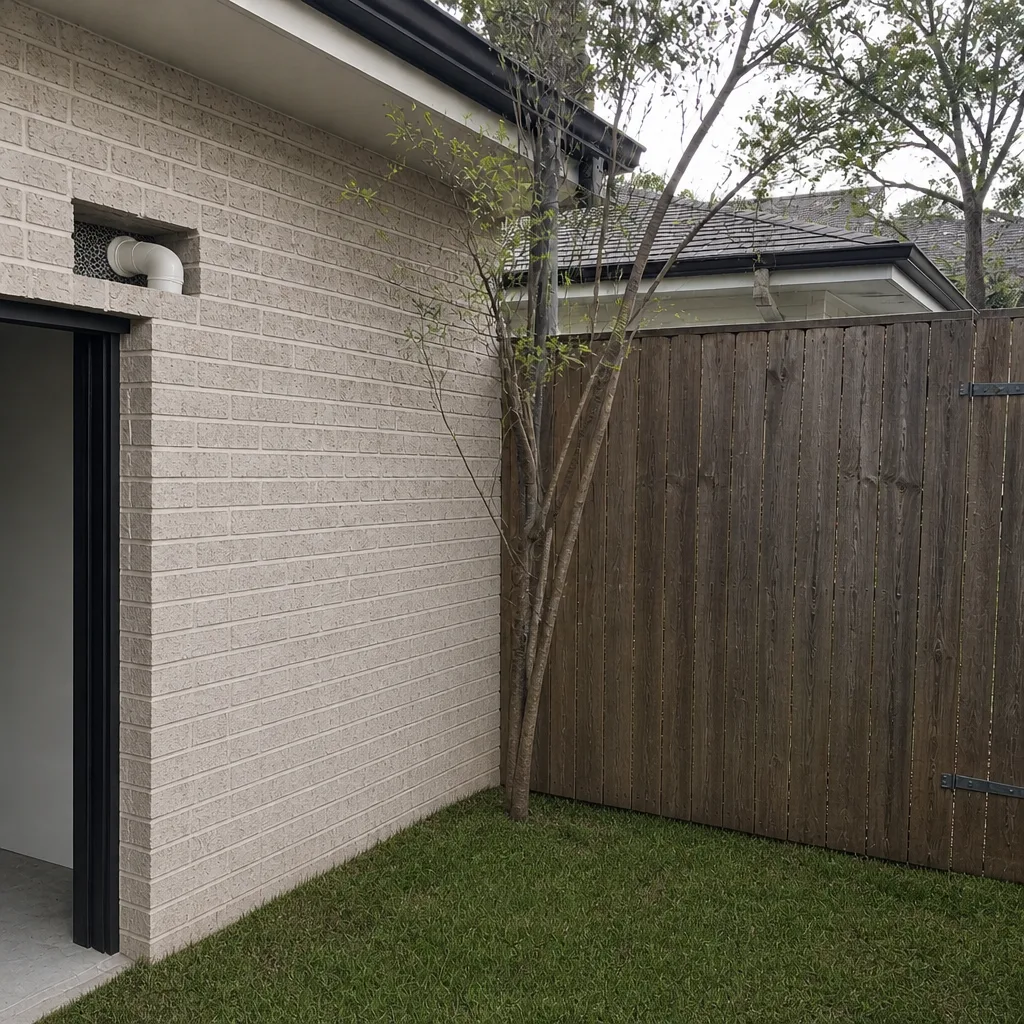 After
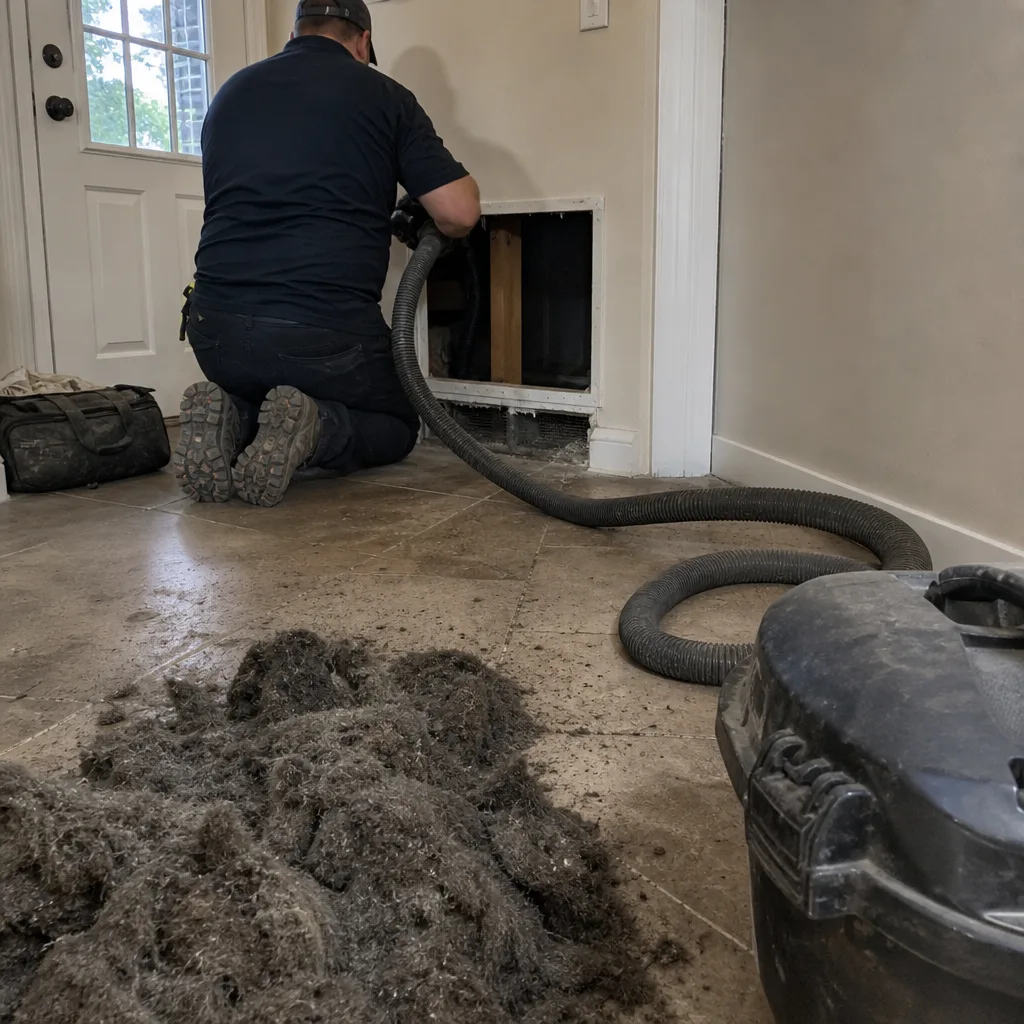 Before
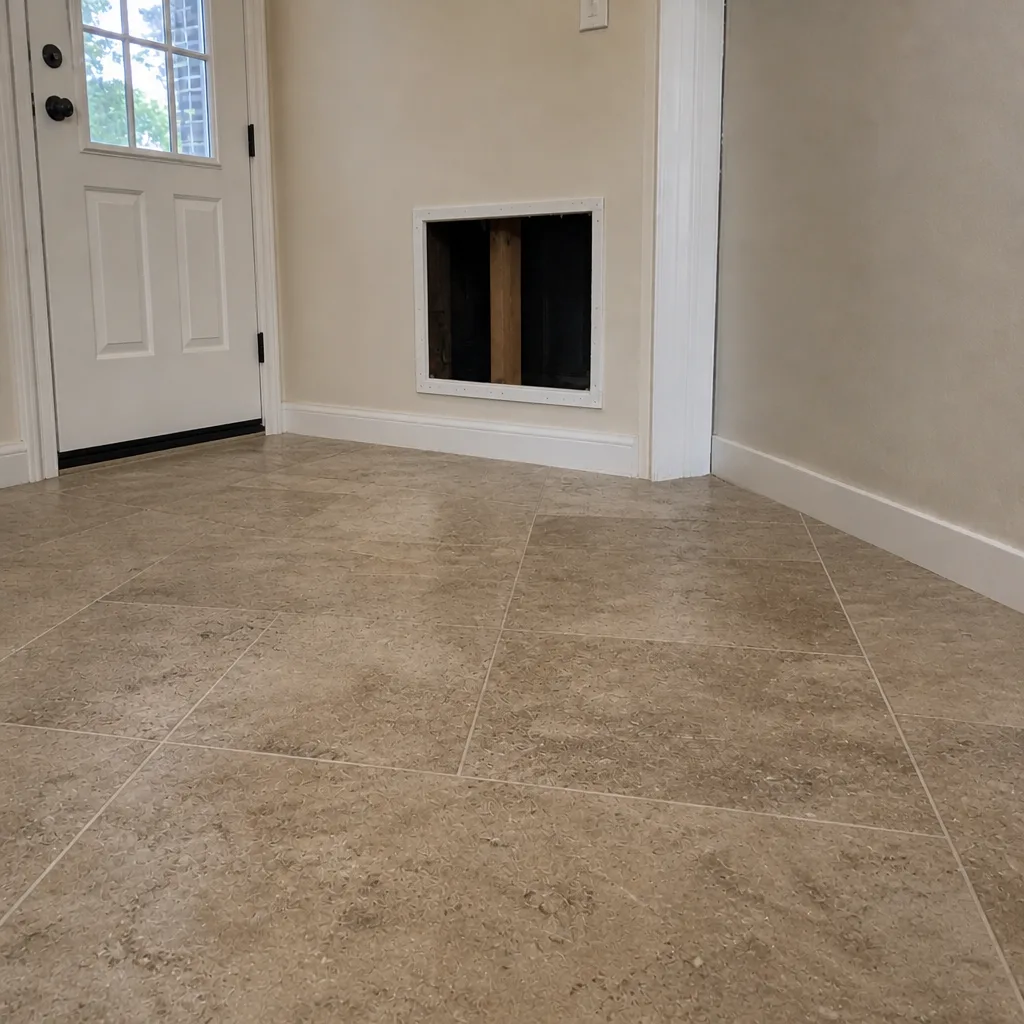 After
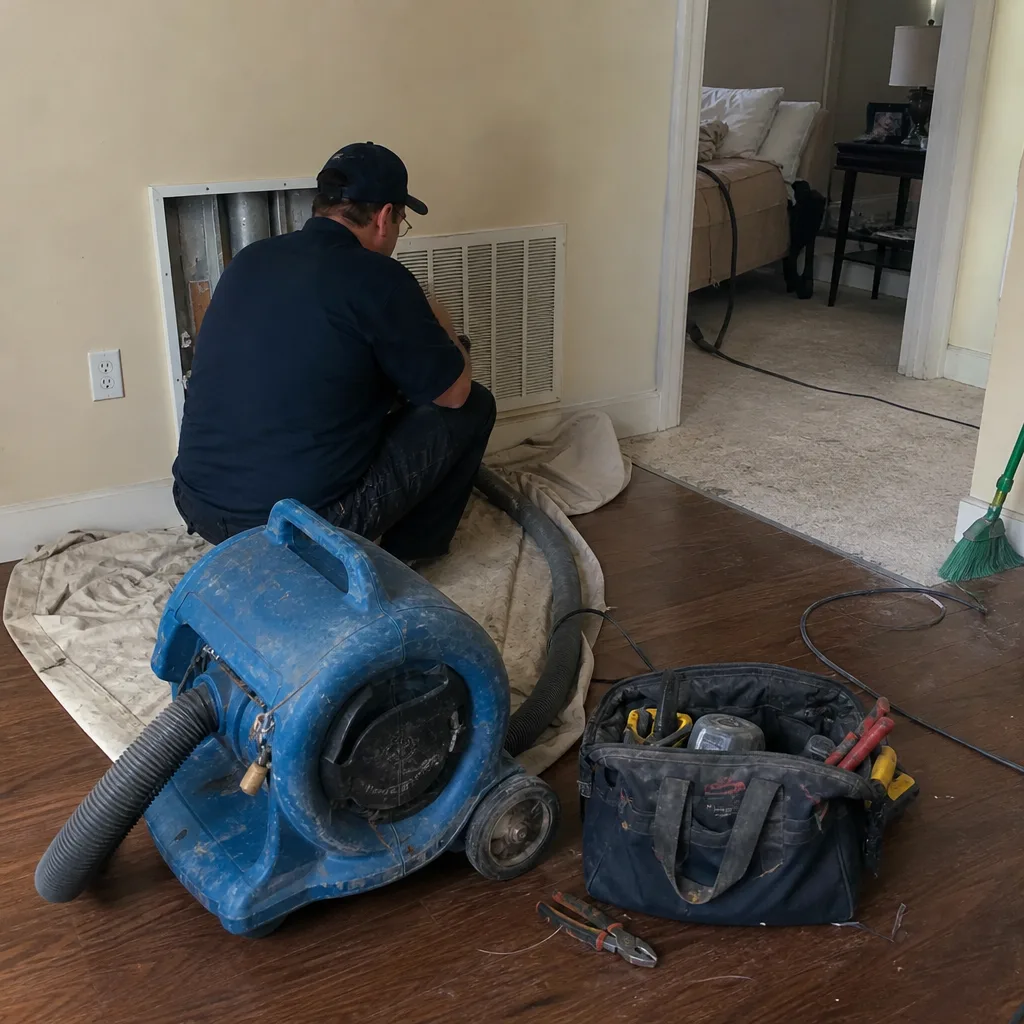 Before
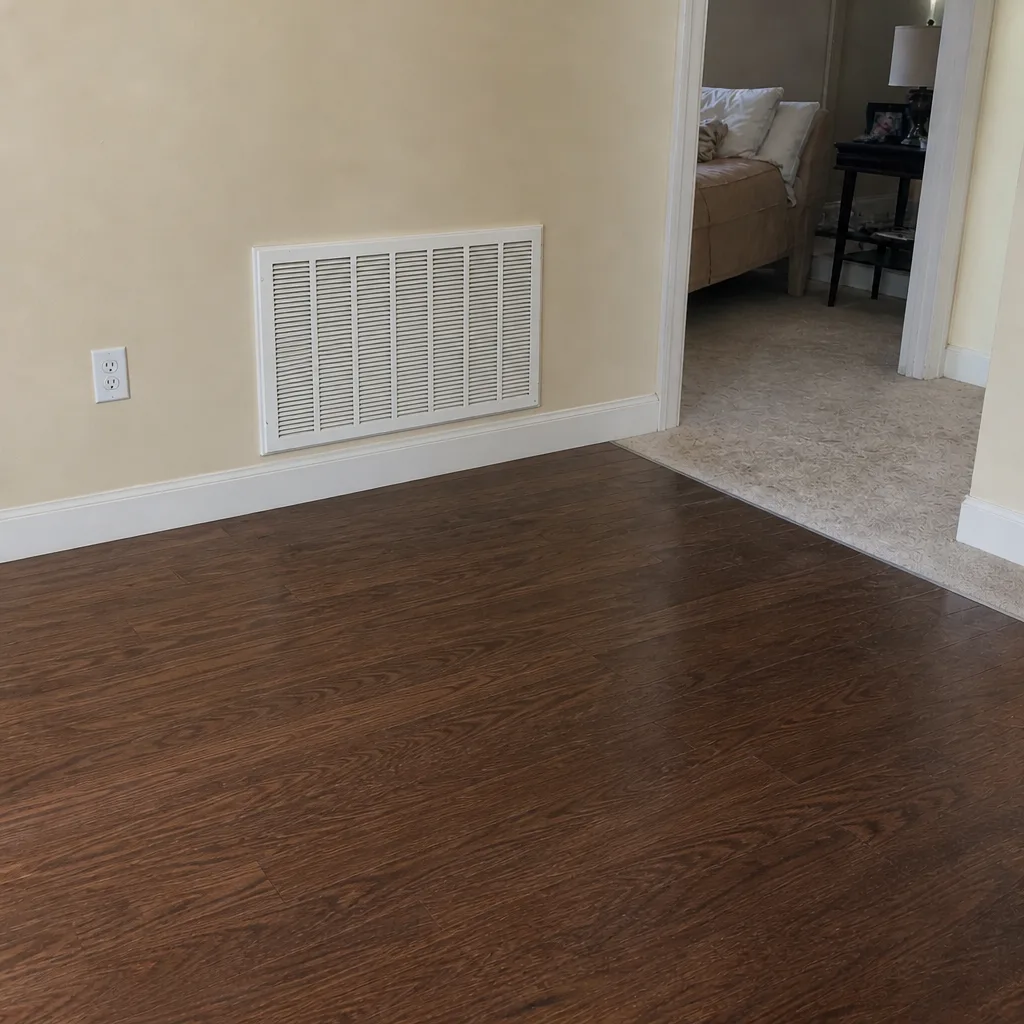 After
Frequently Asked Questions
Dust streaks at register faces and visible debris inside the return point to cleaning, while whistling supplies, cold drafts at boots, and uneven room temperatures point to sealing. Many Bluffview homes need both, and the order matters: clean first, seal second. A camera inspection is the only reliable way to confirm which problem you have. Call (855) 337-1683 for an exact quote; estimates are free.
Because some quotes are for a different job than the one you need. A coupon-ad quote for one vent an hour isn’t the same as a full-system clean with a camera, sealed joints, and a documented post-inspection. On a Bluffview home built in the last few decades, a serious service usually runs several hundred dollars and is priced per system, not per vent. We quote one flat price per system, agreed before work starts, and show before-and-after photos of your own ducts. Call (855) 337-1683 for a free estimate.
Ask for camera photos from inside the duct, a walkthrough at the register boots, and a written summary of what was cleaned and what was sealed. Relying on a verbal promise alone is what we see go wrong most often. A technician who does the work is happy to show it. Call (855) 337-1683 and request the full inspection package.
Most homes get by on a cleaning every few years, but Bluffview’s mild, humid summers and heavy pollen season push that shorter for allergy-sensitive households. A recent remodel, a pet household, or a home with visible dust after cleaning will benefit sooner. It’s also worth scheduling if a home inspection flagged buildup or a new HVAC system was installed.
Yes, but usually because of leaks rather than dirt alone. A separated joint at a trunk run dumps cooled air into an attic, and in a hot North Texas summer that loss shows up on the bill. Sealing closes the gaps; cleaning restores the interior. Our team uses Rotobrush and Nikro equipment on every job, and our Duct Repair & Sealing service addresses the leakage side. Call (855) 337-1683 for a system check.
Rarely. A musty smell usually means moisture is feeding something somewhere, and masking it with sanitizing alone leaves the source intact. Cleaning, targeted sanitizing with Guardsman-line products, and leak correction together address the smell properly. Air Quality & Sanitizing is a separate service for this reason. Call (855) 337-1683 to book a diagnosis.
Common Mistakes to Avoid
- Treating a whistle and a musty smell as the same problem. They point to different causes. Whistling usually means a restriction or a leak at a junction; a musty smell means moisture-fed growth somewhere in the system. Correct diagnosis comes before any cleaning or sealing.
- Buying duct cleaning without asking about leaks. Bluffview sits on expansive clay, and duct joints in homes here separate slowly over time. If the technician never inspects joints, they can’t tell you your dust problem is a leak problem.
- Choosing a quote based on the price-per-vent flyer. Per-vent pricing hides what’s not included: camera inspection, joint sealing, post-cleaning verification. Ask for a flat per-system quote and a written summary of what’s covered.
- Assuming a new filter fixes everything. Filters do their job only when they’re the right size, seated correctly, and changed on schedule. A filter that’s passing air around its edges is not protecting the system.
- Skipping the post-cleaning inspection. A job without camera photos and a walkthrough is a job you can’t verify. The inspection is where trust is earned, so ask for it before you book.
- Sealing a duct that hasn’t been cleaned. Sealing traps debris. Clean first, then seal, then verify.
- Trying to reach attic duct joints without fall protection. Attic runs in Bluffview homes often sit beneath low headers and along narrow trusses. A fall is a real risk, and this isn’t a task to attempt alone.
The Bottom Line
Most duct problems in Bluffview are diagnosable well before they get expensive. Match the symptom to the cause: whistling and cold drafts usually mean leakage, dust and musty odors usually mean contamination, weak airflow at every register usually means a mechanical issue upstream. Cleaning fixes contamination, sealing fixes leakage, and neither fixes a blower motor. North Texas clay makes joint separation a real problem in this area, so a proper diagnosis has to look at both the inside of the duct and the connections between runs. Ask for camera photos, ask for a walkthrough, and price per system. That combination is what separates real work from a flyer coupon.
Air Duct Cleaning Bluffview provides five core services covering the full indoor air path: Air Duct Cleaning Bluffview, dryer vent cleaning, HVAC cleaning, Air Quality & Sanitizing, and Duct Repair & Sealing. We use professional-grade Rotobrush and Nikro equipment on every job, work with Honeywell, Aprilaire, Abatement Technologies, and Guardsman product lines, and our technicians have up to 12 years of experience. Call (855) 337-1683. We answer 24/7, and fast dispatch runs from 7am to 7pm, Sunday through Friday.
Written by the team at Air Duct Cleaning Bluffview.