
Honeywell Air Duct Cleaning in Bluffview: A Homeowner’s Guide
Most people searching for “Honeywell air duct cleaning in Bluffview” assume Honeywell makes a duct cleaning machine. It doesn’t. Honeywell makes the filtration and air treatment equipment that decides what your air quality looks like after the ducts are clean. The brand names get mashed together and homeowners end up buying hardware they don’t need, or skipping a step that would have made the hardware worth it. This guide separates the two halves of the job: the cleaning and the treatment.
If you’d rather not untangle the equipment catalog yourself, call (855) 337-1683. We answer 24/7. Fast dispatch from 7am to 7pm, Sunday through Friday.
What Does Honeywell Actually Make That’s Relevant to Duct Cleaning?
Honeywell doesn’t clean ducts. Honeywell makes the equipment that treats air either at the filter slot or downline in the system. Three product families come up most often in a whole-home indoor air quality conversation, and each solves a different problem.
- Media air cleaners. A high-capacity pleated filter cabinet that replaces a standard 1-inch filter slot. It captures finer particles than a typical 1-inch filter and holds them across a much larger surface area, so airflow isn’t choked the way it is with a dense filter crammed into a thin slot. Long change intervals compared to a 1-inch.
- UV germicidal lights. Lamps mounted in the ductwork or at the coil that shine ultraviolet light on the airstream and the wet surfaces where biological growth tends to form. These target organisms; they don’t remove dust or particles.
- Electronic air cleaners. A powered filter that charges particles and traps them on collection plates. Effective on fine particulate, but requires cleaning of the plates to keep working, and it draws power and needs service.
None of these three does any cleaning. They treat air that passes through a system. That distinction is the whole point of this guide. In a Bluffview home with a dusty return and a filter slot the size of a paperback, a media air cleaner can be a real upgrade. Put that same cabinet on a duct system full of construction debris and loose joints, and you’ve filtered contaminated air while recirculating debris from the network itself.
Why Filtration Upgrades Only Work on a Clean, Sealed Duct System
A Honeywell media air cleaner can capture particles a standard 1-inch filter misses entirely. But installing one after a substandard duct cleaning is like putting a water filter on a contaminated pipe. The filter does its job; the pipe keeps delivering the problem.
Two things have to be true before filtration hardware performs as designed:
- The duct interior is clean. Loose debris on duct surfaces keeps shedding into the airstream regardless of filter efficiency. A clean network means the filter is catching what the house produces, not what the ducts are re-releasing.
- The duct system is sealed. Return-side leaks pull attic and cavity air into the system. Supply-side leaks dump conditioned air into the same cavities. Either way, a pressure imbalance means the filter cabinet sees less air than it was sized for, and the whole house sees less clean air than expected.
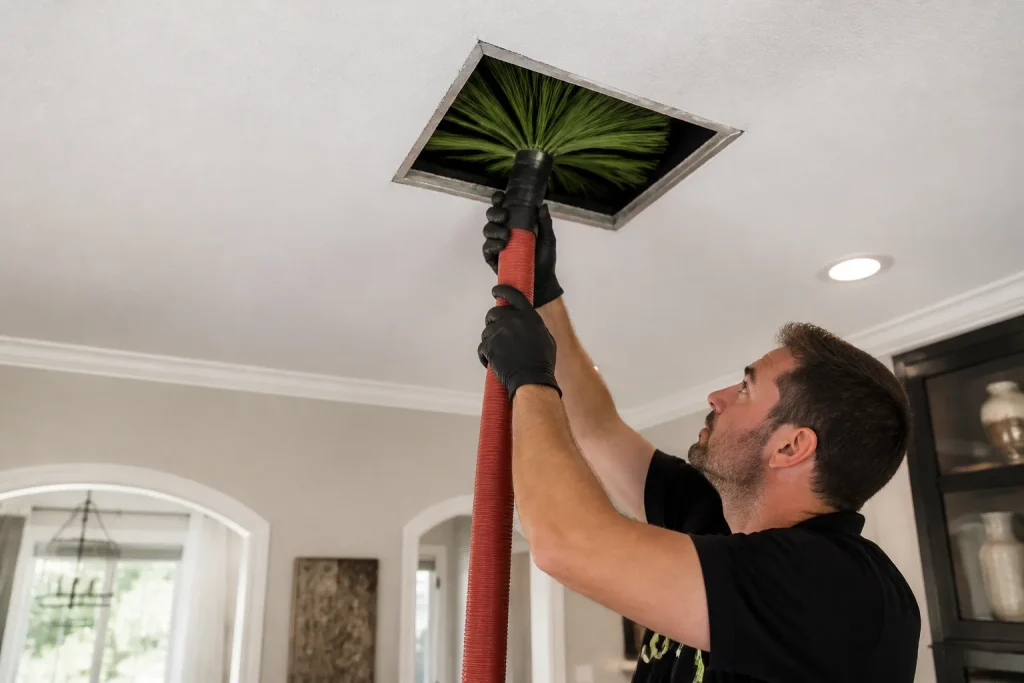
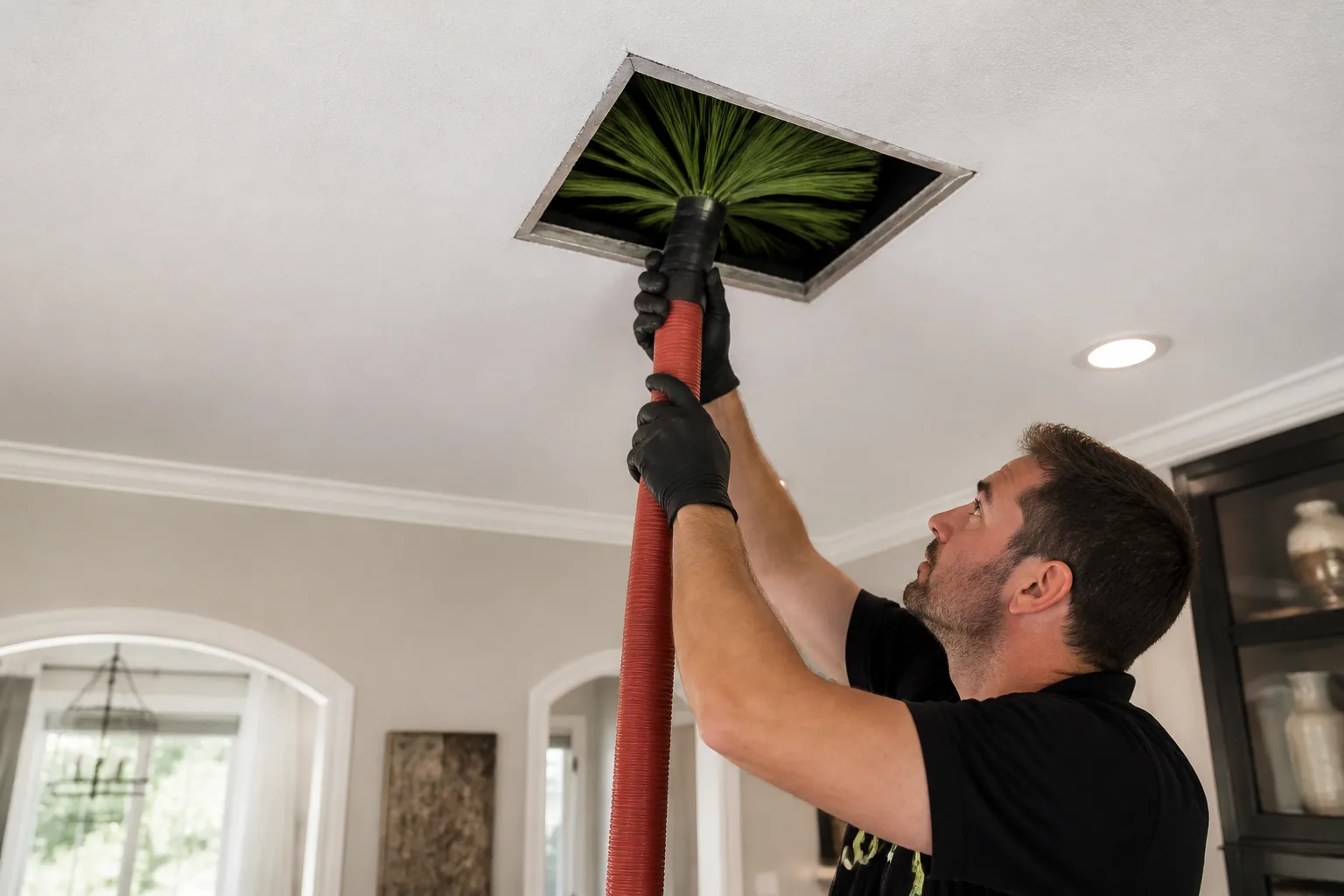
This is why we treat duct repair and sealing as part of the same job as cleaning, not an upsell tacked onto the end. Rotobrush and Nikro equipment handle the cleaning with real agitation and negative pressure. Sealing mastic and mesh handle the joints and penetrations. Only after both does the filtration conversation hold water. If any of this sounds like the starting point you need, our overview of Air Duct Cleaning Bluffview covers the whole-system approach.
A quick way to test the logic yourself: look at your filter the week after a duct cleaning. If it’s still loading fast, the ducts weren’t the source. If it stays cleaner longer, the cleaning worked and a filtration upgrade will pay off.
What Bluffview Homeowners Should Check Before Buying Honeywell Hardware
Not every HVAC system is a candidate for every Honeywell product. Compatibility questions come up on nearly every air quality consult we run in Bluffview, and they’re worth answering before anyone spends money.
- Filter slot depth and width. A media air cleaner needs a cabinet that fits the return plenum. Some closets and air handlers in Bluffview homes have tight clearances that force a smaller cabinet than the ideal.
- Static pressure budget. Higher-efficiency filtration adds resistance. Equipment rated for one filter may not tolerate another without a pressure check. A technician reads static pressure before and after, so the system doesn’t starve for airflow.
- Air handler and coil configuration. A UV light has to be aimed at the coil or airstream without hitting plastics or wiring that degrade under UV exposure. Placement matters more than the lamp itself.
- Electrical availability. Powered equipment needs a supply at the install point. Not all air handler closets have one.
- Existing duct condition. A sealed, cleaned system is a precondition, not an afterthought. We won’t install filtration on a compromised network any more than we’d recommend a filter change schedule for ducts that aren’t holding pressure.
The honest recommendation in every one of these cases is to have a technician measure before recommending. A specification sheet tells you a filter’s rating. A pressure reading tells you what your specific system will do with it.
How Do UV Germicidal Systems Handle What Cleaning Can’t?
Mechanical cleaning removes debris, dust, and loose biological material from surfaces a brush and vacuum can reach. It does not sterilize. UV germicidal lights sit in the airstream and on the coil to keep organisms from recolonizing surfaces after cleaning, especially the damp coil where condensation encourages growth.
What UV systems address that cleaning alone can’t:
- Organisms on wet coil surfaces that a duct brush never contacts.
- Continuous biological load in the airstream passing the lamp on every cycle.
- Recolonization on clean duct surfaces between cleanings.
Where UV helps most: homes with recurring musty odors, allergy complaints that persist after cleaning, or a coil that’s been a growth site. Where it doesn’t: particle removal. UV doesn’t filter dust. If dust is your complaint, a media air cleaner or better filter habits are the answer, not a lamp.
This is the phase where our Air Quality & Sanitizing service does its work. We use Guardsman-line products alongside Honeywell equipment, so the treatment phase and the hardware upgrade work together instead of fighting each other. Our full air duct cleaning service handles the mechanical side before any lamp or sanitizing step begins.
The Honest ROI: When a Honeywell Upgrade Makes Sense
Here’s where we push back on the urge to buy hardware for its own sake. Filtration upgrades make sense in some homes and are a waste of money in others. The dividing line is usually the problem being solved, not the brand on the box.
| Situation | Honeywell upgrade worth considering? |
|---|---|
| Allergy symptoms that persist after a proper duct cleaning | Yes – media air cleaner or UV, depending on whether the trigger is particulate or biological |
| Dust settling quickly on surfaces after cleaning | Maybe – start with filter upgrade and sealing first |
| Musty odor that returns within weeks of cleaning | Yes – UV system aimed at the coil, plus duct integrity check |
| Home with a standard 1-inch filter doing fine | Usually no – better filter habits accomplish the same result |
| Duct system with leaks and unsealed joints | Not yet – repair and seal first, then revisit |
The “better filter habits” path means buying the right MERV-rated filter for your system, changing it on schedule, and keeping the return grille clear. For a home that doesn’t have a specific air quality complaint, that’s the whole job. It costs a fraction of a media cabinet and does most of the work.
Where the hardware earns its price is in homes with a real, persistent complaint that’s survived cleaning. And the investment only works if the ducts underneath are clean and sealed. That sequencing is not negotiable.
When to Call a Pro
Some parts of this work are homeowner-readable and some are not. Filter swaps and return grille cleanings are the former. Anything that involves opening the duct network, sealing joints, reading static pressure, or wiring a UV lamp is the latter.
Call a pro when:
- You’re considering a media air cleaner or UV install and want a static pressure reading first.
- Your ducts show moisture, mold, or a musty odor that keeps coming back.
- A home inspection flagged duct debris, disconnected runs, or unsealed joints.
- You’re post-renovation and dust keeps settling weeks after the drywall work finished.
- You’ve had a duct cleaning and want a second opinion on whether it was thorough.
Clean ducts are only the beginning – we seal, repair, and sanitize too, so the same visit covers every fix you’d otherwise schedule separately. Our dryer vent cleaning and HVAC cleaning services run alongside the duct work when a whole-system clean is the goal. Our technicians have up to 12 years of experience with this equipment, which matters most when the diagnosis is unclear and the correct answer is “don’t buy the hardware yet.”
The Bottom Line
Honeywell makes filtration and treatment equipment, not duct cleaning equipment. A media air cleaner, a UV germicidal light, or an electronic air cleaner can all be worth owning, but only after the duct surface is clean and the network is sealed. Buying the hardware first is the wrong order.
If you’re in Bluffview and want to know whether a Honeywell upgrade makes sense for your home, start with a professional look at the ducts. We use Rotobrush and Nikro equipment on every job, work with Honeywell, Aprilaire, Abatement Technologies, and Guardsman product lines, and we’ll tell you when filter habits beat a hardware upgrade. Air Duct Cleaning Bluffview offers free estimates – call (855) 337-1683. We answer 24/7. Fast dispatch from 7am to 7pm, Sunday through Friday.
Frequently Asked Questions
No. Honeywell makes air filtration and treatment products – media air cleaners, UV germicidal lights, and electronic air cleaners – that install in the HVAC system. The cleaning itself is done with professional equipment like Rotobrush and Nikro systems. Honeywell hardware controls what the air looks like after the ducts are clean.
After. Installing filtration on a dirty duct system means the filter is handling debris the ducts are still shedding. Clean and seal the duct network first, verify joints hold, then install filtration so it performs as designed. Call (855) 337-1683 for an exact quote – estimates are free.
It can help if the smell is biological and located at the coil or airstream. UV systems target organisms that mechanical cleaning can’t sterilize. But UV doesn’t remove dust or improve duct integrity, so a full clean and seal comes first. If odor persists after cleaning, UV is worth a conversation.
Most systems can accept one, but not every configuration without checking. Filter cabinet size, static pressure budget, electrical availability, and coil configuration all affect the plan. A technician verifies compatibility before recommending any specific Honeywell product.
Written by the team at Air Duct Cleaning Bluffview.
Need Air Duct Cleaning Help?
Call Air Duct Cleaning Bluffview - the local pro we connect you with is licensed and insured, here with fast help in Bluffview.
(855) 337-1683