
Top Signs You Need Air Duct Cleaning Service – Don’t Ignore These
If dust settles back onto your furniture within two days of cleaning, your supply vents are re-coating every surface in the room. That’s the tell most people miss. The reliable signs of dirty ducts in Bluffview aren’t dramatic; they’re subtle, cumulative, and easy to explain away until your energy bills climb or your allergist starts asking about the air in your house. Below are the signals worth paying attention to, and how to tell a duct problem from something bigger. If you’d rather not climb around inspecting vents yourself, call (855) 337-1683 for a free estimate.
Key Takeaways
- Dust returning within 48 hours of cleaning points to your vents, not your housekeeping.
- Rising bills in an otherwise well-kept Bluffview home often mean restricted airflow, not a failing system.
- Renovation dust makes cleaning time-sensitive, not optional.
- A five-minute vent check with a flashlight and a white cloth tells you plenty before you call anyone.
- Some signs point to moisture or HVAC trouble that cleaning alone won’t fix.
1. Dust Is Back on Your Furniture Within 48 Hours
You dust on a Sunday. By Tuesday the same shelf wears a fresh gray film. In our experience, that turnaround time is the single most reliable sign that debris is being pushed out of your supply vents and into the room, not settling out of the air on its own. A sealed, clean system delivers air without a visible payload.
What separates this from ordinary household dust is pattern. Look at where it lands. Dust concentrated directly under or across from a supply register, or a faint dark halo around the vent grille itself, means the vent is the source. Dust spread evenly across a whole room usually means something else – open windows, pets, a dusty attic above. In Bluffview, with our long dry stretches and light winds, airborne particulate does drift indoors, so pattern is how you tell the two apart.
What to check
- Wipe a shelf with a white cloth. Repeat in 48 hours. Dark gray residue means re-contamination.
- Look for dark streaks radiating from supply registers.
- Check return grilles for a visible fuzz of lint and debris.
Dust that returns this fast after professional housecleaning is a duct signal, and it usually means the whole system needs a real clean with professional-grade equipment, not a shop-vac pass at the registers.
2. Utility Bills Creep Up in a Well-Maintained Home
If your HVAC system is serviced, your filter is changed, and your bill still climbs, restricted airflow from debris accumulation is a common culprit. Debris lining the inside of ductwork narrows the pathway the blower has to push against. The blower works harder, the system runs longer to reach the thermostat setting, and the cost shows up on your statement rather than in a dramatic breakdown.
This is where a lot of Bluffview homeowners get misled. A rising bill feels like an equipment problem, so people call an HVAC tech who finds a healthy unit and a restricted duct system. Cleaning alone helps, but if the ducts are also leaking at the joints, you’re losing conditioned air before it ever reaches the room. That’s why repair and sealing belong in the same conversation as cleaning. A duct system that’s clean but leaking still wastes energy.
In our experience, the houses that see the clearest improvement are the ones where cleaning and sealing happen together. If your bill has been quietly climbing for two or three seasons while everything else checks out, get the ducts inspected. Call (855) 337-1683 for a free estimate.
3. A Simple Vent Inspection You Can Do Before Calling Anyone
You don’t need tools to get a decent read on your ductwork. You need a flashlight, a step stool, and five minutes. Here’s how to do a basic visual inspection of your supply and return vents before you call anyone.
- Switch the system off at the thermostat.
- Remove a supply register cover. Shine the flashlight into the duct run.
- Look for a visible coating of dust, lint, or debris on the inner walls. Light dusting is normal. A thick, uneven layer is not.
- Wipe the inside of the duct with a white cloth and check the color. Gray is normal; brown, black, or greasy is not.
- Repeat at a return grille, which usually tells you more since it pulls from every room.
- Sniff near an open vent. Musty or stale odor points to moisture; a dusty, dry smell points to debris.
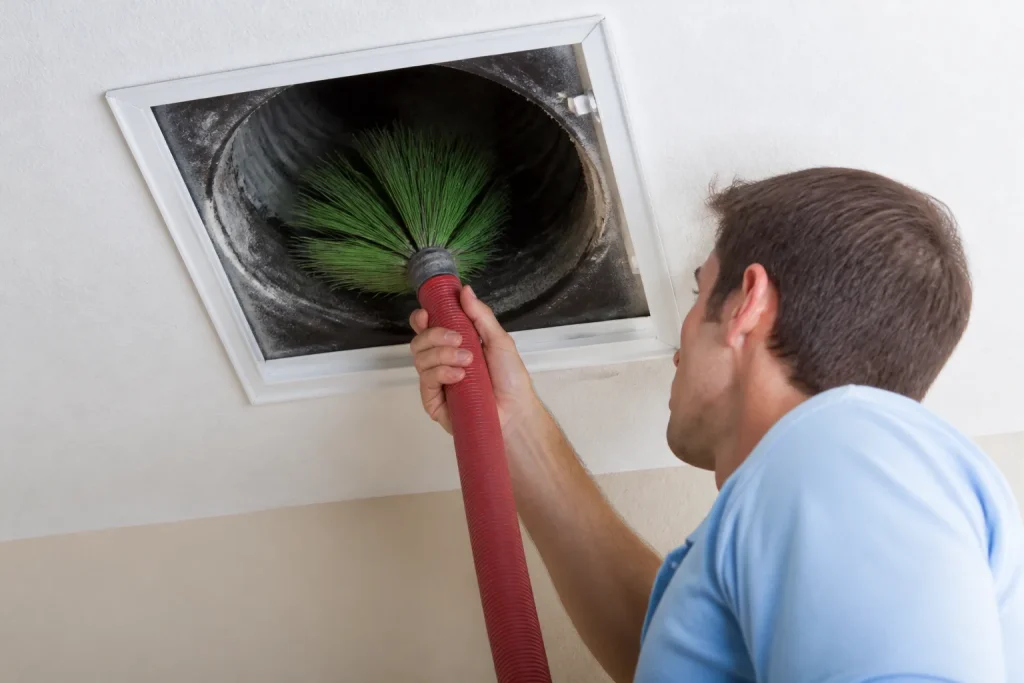
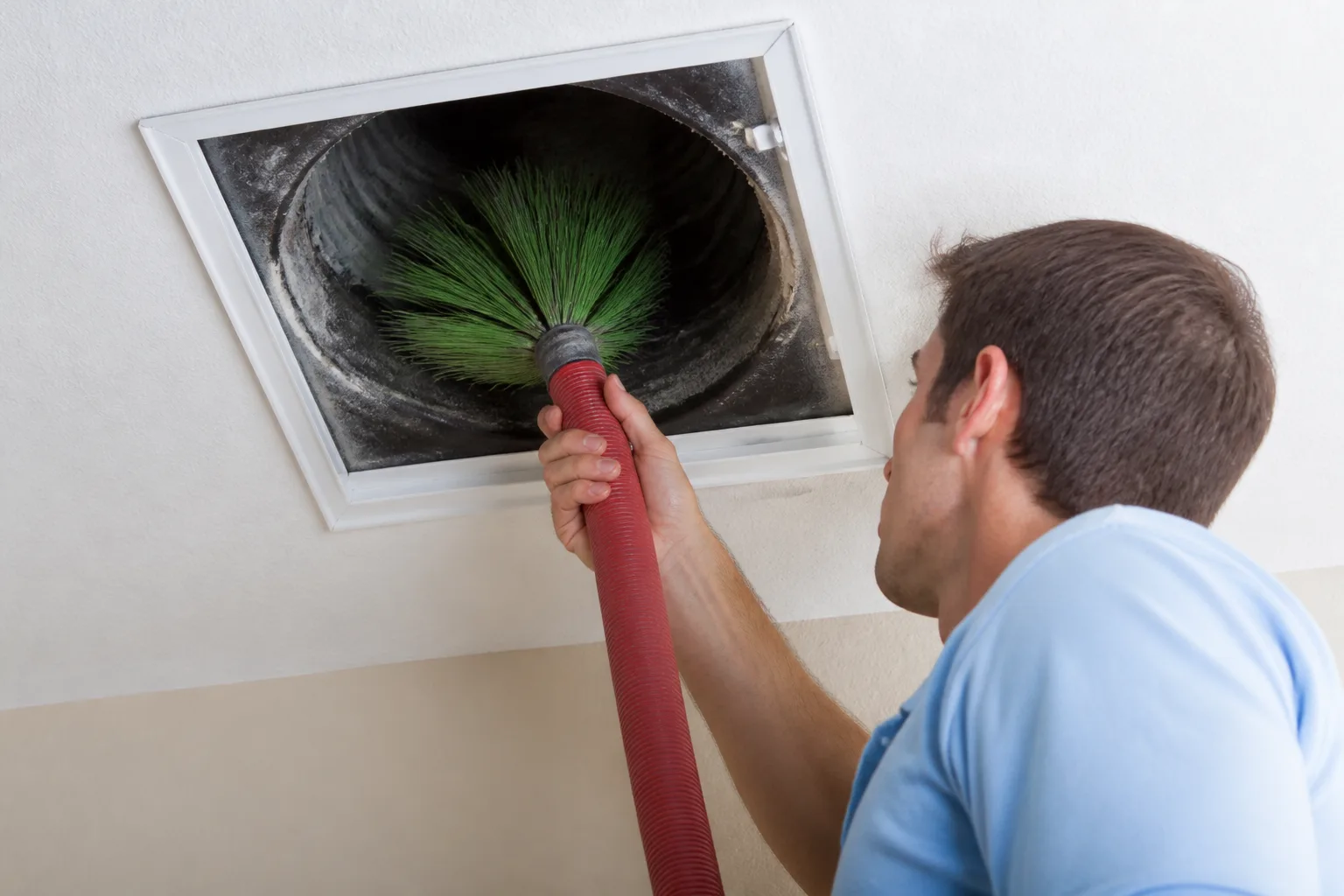
What you’re looking for is consistency. If one vent is dirty, that’s local. If every vent you check shows the same heavy coating, the whole system is contaminated and a full clean is warranted. We bring Rotobrush and Nikro equipment to jobs precisely because consumer tools can’t reach past the first few feet of a duct run. Where a flashlight shows heavy buildup at the register, there’s more behind it.
4. Allergy Symptoms That Track With Time Spent Indoors
The pattern matters more than the symptom. Outdoor allergens in Bluffview follow a seasonal rhythm, and symptoms tend to ease when you come inside and close the windows. Duct contamination does the opposite. Symptoms that get worse the longer you’re indoors, particularly in bedrooms or a home office, point toward the system rather than the pollen count.
Here’s the distinction we’ve learned to walk people through. If your allergies flare after a walk or when the windows are open, that’s outdoor. If they flare overnight, in the morning after sleeping in a closed room, or specifically after the HVAC kicks on, suspect your ducts. Mold spores and fine debris recirculated through the supply vents land in the room where you’re breathing. If your allergist has started asking about your home’s air quality, that’s your cue to act.
Cleaning is the first step. For homes with lingering microbial or allergen concerns, air quality and sanitizing service goes a step further to address the problem at the source. Products like those from Abatement Technologies and Guardsman help us treat and protect the system as part of a documented process.
5. The Post-Renovation Window – This One Is Time-Sensitive
After a renovation, drywall dust and construction debris settle into every open surface, including your ductwork. That dust doesn’t stay put. Every time the system runs, fine particles get pushed into the living space and pulled into the blower and coil. That’s why cleaning after major work is time-sensitive rather than optional – the longer debris sits, the more it moves through the system and the harder it is to remove.
This matters even more because contractors often run the HVAC system during construction to keep crews comfortable, which pulls dust straight into the returns. By the time the job is done, contamination is already distributed. If you’ve just finished a remodel in Bluffview, get the system assessed before you move back into the finished rooms. Drywall dust is a fine, aggressive particle that coats coils and settles into duct walls in a way ordinary household dust doesn’t. If you’re also dealing with construction dust in the laundry or a recently added dryer, dryer vent cleaning is worth scheduling alongside a duct inspection.
6. When It’s Not the Ducts – Signs of a Bigger Problem
Not every signal points to a dirty duct system. Some point to moisture, some to the HVAC equipment itself, and getting them confused wastes money. Here’s how we separate them.
- Dirty-duct signs: consistent dust return, visible buildup in every vent, symptoms that track with indoor time, rising bills in a maintained home.
- Moisture signs: musty, damp, or earthy odor that gets stronger near specific rooms, visible condensation on registers, warped or rusted ductwork. These call for moisture control first, cleaning second.
- HVAC signs: a system that’s short-cycling, struggling to reach temperature, or making unusual noises. Get the equipment checked; the ducts may still need cleaning, but cleaning won’t fix failing hardware.
We treat the whole system, not just what’s visible, which is why we look at ducts, the air handler, and the coils together. If we find moisture or equipment issues, we’ll tell you plainly so you can address the root cause.
Related Services in Bluffview
Duct work rarely travels alone. If your signs point toward one of these areas, HVAC cleaning addresses the equipment and coil side, and air duct cleaning covers the ductwork itself. When a duct system is both dirty and leaking, cleaning and sealing should happen together – our duct repair and sealing service exists for exactly that reason. Homeowners who want the whole picture can start with us at Air Duct Cleaning Bluffview.
What happens when you call
- 1
A real person answersNo phone trees – you reach a local pro.
- 2
You get an upfront price rangeHonest numbers before anyone is dispatched.
- 3
A background-checked tech heads outLicensed & insured, dispatched right away.
- 4
You approve before work beginsNothing starts until you say go.
When to Call a Pro
Foggy as a bathroom mirror after a hot shower is normal. Heavy dust on every register in a house you cleaned last week is not – and it’s not something a vacuum and a warm heart will solve. If you’re seeing two or more of the signs above, or you’ve just wrapped up a renovation, it’s time to call. Our technicians have up to 12 years of experience and use Rotobrush and Nikro equipment on every job, so you’re getting a documented, professional-grade clean rather than a surface pass.
The Bottom Line
The reliable signs of dirty ducts in Bluffview are cumulative and easy to rationalize away: dust returning within 48 hours, bills creeping up in a maintained home, allergies that follow you indoors, and post-renovation dust in the system. Some signs point to moisture or HVAC trouble, and the two shouldn’t be confused. If you’re in Bluffview and need help, Air Duct Cleaning Bluffview offers free estimates. Call (855) 337-1683. We answer 24/7. Fast dispatch from 7am to 7pm, Sunday through Friday.
Frequently Asked Questions
Look for consistent signs rather than a single one: dust returning within 48 hours of cleaning, visible buildup inside multiple vents, musty or stale odor, allergy symptoms that worsen with time spent indoors, and rising utility bills in a well-maintained home. If you check two or more vents and both show heavy coating, the whole system is likely due. The most reliable approach is a professional assessment – call (855) 337-1683 for a free estimate.
Dirty ducts cause dust return, odor, and airflow restriction. An HVAC problem shows up as short-cycling, inability to hold temperature, or unusual noises from the equipment. Cleaning won’t fix failing hardware, and equipment repair won’t fix a contaminated system. When in doubt, an inspection can sort out which is which. Call (855) 337-1683 for a free estimate.
Drywall dust and fine construction debris settle into ductwork and then get pushed through the living space every time the system runs. The longer it sits, the more it coats coils and duct walls, making removal harder. If you’ve remodeled in Bluffview, get the system assessed before the debris distributes further. Call (855) 337-1683 for a free estimate.
Professional-grade equipment, not consumer tools or a shop-vac. At Air Duct Cleaning Bluffview we use Rotobrush and Nikro systems designed to reach the full duct run, and we can pair cleaning with repair, sealing, and sanitizing where called for. That’s the difference between a surface pass and a documented clean. Call (855) 337-1683 for a free estimate.
Written by the team at Air Duct Cleaning Bluffview.
Need Air Duct Cleaning Help?
Call Air Duct Cleaning Bluffview - the local pro we connect you with is licensed and insured, here with fast help in Bluffview.
(855) 337-1683